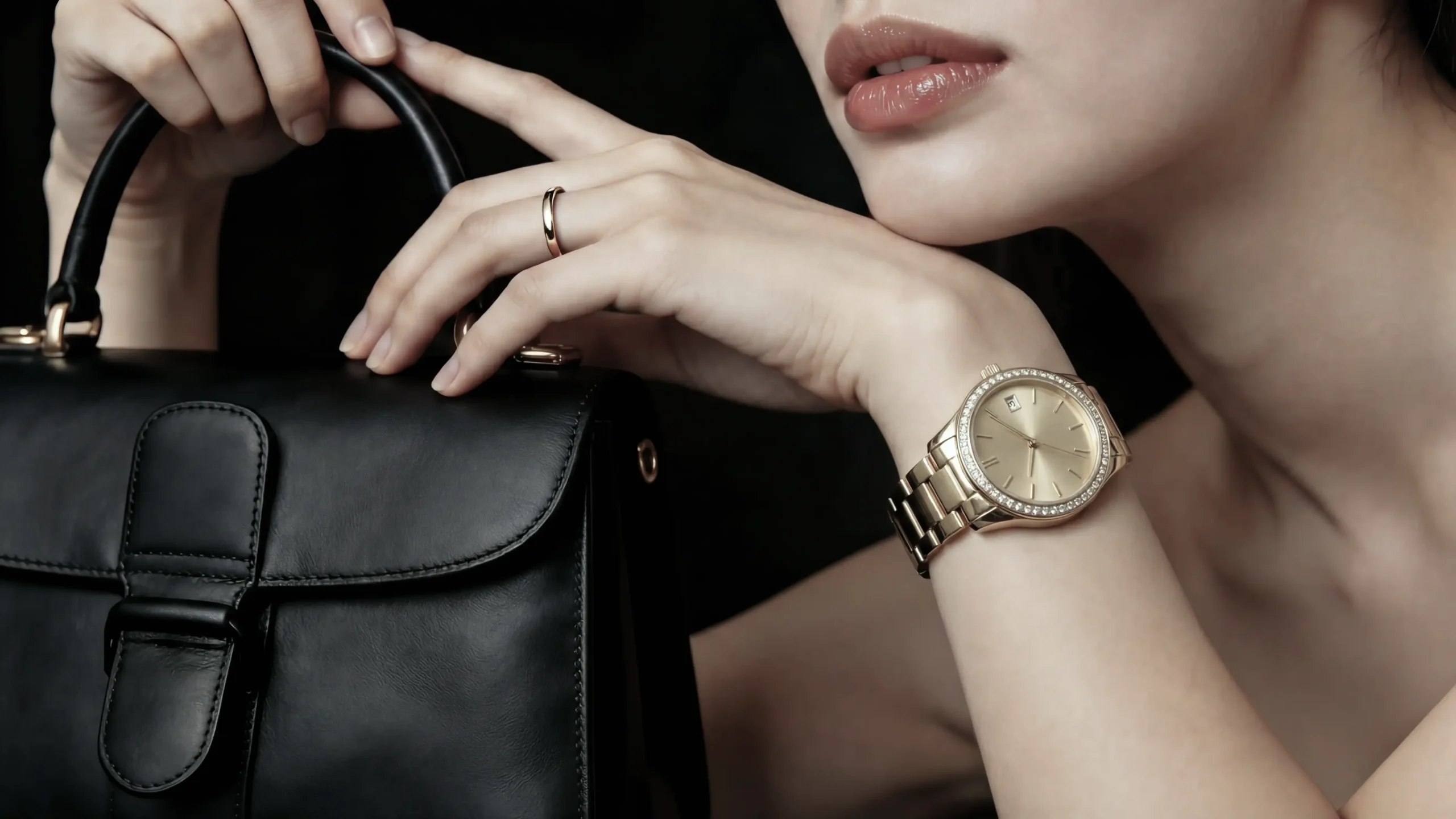
A stitch pattern can be copied. A hardware stamp can be copied. A DNA marker cannot. That is the direction luxury handbag authentication is being pushed toward, as counterfeit bags close the gap not just on human inspectors, but on the AI systems built to catch them.
The scale of the problem
Entrupy, an AI-powered authentication platform used by resellers, department stores and TikTok Shop, published its State of the Fake 2026 report in April 2026 covering 2025 activity. Entrupy authenticated $3.34 billion worth of merchandise that year at a 99.86% accuracy rate, and still, 8.1% of luxury submissions came back “unidentified,” meaning the item could not be verified as authentic.
Louis Vuitton was named the most-faked brand by volume, accounting for 33.14% of all luxury submissions. Gucci followed, with $17,841,197 worth of fake bags submitted for review in 2025 alone; Chanel counterfeits reportedly carried the highest total resale value, at over $500 million the year before. Measured by rate rather than volume, Goyard was the riskiest brand of all: 18.9% of its bags submitted for authentication were flagged as fake, despite making up only 1% of total submissions.
The prior year’s data, from Entrupy’s 2025 report, put the broader economic cost in context: fraudulent returns and counterfeit claims cost US retailers an estimated $103 billion in 2024, while the EU’s Intellectual Property Office attributes roughly €60 billion in annual losses and 434,000 eliminated jobs across the bloc to counterfeit goods generally.
Why current authentication methods are struggling to keep up
Luxury handbag authentication has evolved a fair amount in the last five years. Brands like Louis Vuitton moved away from printed date codes after March 2021, replacing them with embedded NFC and RFID microchips invisible to the naked eye. LVMH has also rolled out AURA, a blockchain platform reported to track bags from tannery to point of sale for some of its houses. None of this is nothing, it raises the bar for counterfeiters considerably.
But raising the bar is not the same as closing the gap. Sophisticated counterfeiters have started adding fake RFID chips to replicas; the chips do not connect to a brand’s private blockchain, so they fail verification when checked against the real database, but only if someone checks. And a chip, however well protected digitally, is still a discrete component that can be counterfeited, misapplied, or simply omitted from a fake convincing enough to pass on stitching and hardware alone. Entrupy’s own report is a useful reminder here: even a purpose-built AI system with access to 90 million reference images still returns an “unidentified” rate in the double digits for some of the most recognizable brands in the category.
The pattern echoes what is happening across other luxury categories: no single feature, whether a chip, a card, or a serial number, can carry the full weight of an authenticity claim on its own.
Why the resale market raises the stakes
The second-hand luxury market is exactly where authentication gets tested hardest. A handbag bought new, from an authorized boutique, arrives with a clear chain of custody. The same bag, three owners and two continents later, does not. Resale platforms, consignment stores, and pawn and trade-in dealers are the ones absorbing the risk of that gap, and, per Entrupy’s data, absorbing it at a rate that has not meaningfully declined even as detection tools have improved.
For brands, this matters beyond any single fake sale. Every counterfeit that circulates in the resale market, misidentified or not, erodes the pricing and trust the brand built in the primary market.
What luxury handbag authentication needs next
Chips and blockchain records are still, fundamentally, claims layered onto an object rather than proof embedded within it. Paper certifications can be duplicated. A physical marker applied to the material itself cannot.
This is the premise behind Haelixa’s approach to physical verification. A DNA marker applied to leather, thread, or hardware at the point of manufacture is invisible, harmless, and built to be resistant through use, repair, and resale. Because it is built with natural DNA sequences and applied directly to the material, it doesn’t affect quality and cannot be removed, which means it does not depend on a chip staying intact, a database staying reachable, or a buyer trusting a sticker. It depends on testing the material itself.
Blockchain records a claim. We verify the object. For handbag brands and the resale platforms built around them, that difference is what turns a counterfeit rate measured in the double digits into something a physical test can close out, one bag at a time.
The takeaway
Luxury handbag authentication is in a race between counterfeiters and every layer of protection brands have added, chips, blockchain, AI image comparison. Each has raised the bar. None has closed the gap on its own. A simple solution to a complex problem starts with the material, not the accessory bolted onto it.
Download our ProofDNA™ Brochure to see how we can protect your brand.