Luxury objects are made to last, and some change owners during their lifetime. At the first sale, authenticity is guaranteed by the Maison and the boutique, and supported by what the client takes home: the receipt, the certificate or warranty card, the original packaging. When the object is resold or passed on, these often do not follow it.
The same question returns: is this the object the Maison made? That question is getting harder to answer. The second-hand market is growing faster than new luxury, and the counterfeits entering it are no longer easy to spot.
A €50 billion second market
The second-hand luxury market reached an estimated €50 billion in 2025, growing 4% to 6%, according to the Bain-Altagamma Luxury Goods Worldwide Market Study. In the same period, the personal luxury goods market held broadly flat at around €358 billion.
For every seven euros spent on new personal luxury goods, roughly one more now changes hands on the secondary market. Bain attributes the growth to demand for value, the appeal of treasure hunting and interest in iconic archival pieces.
Authentication has become an industry of its own. Future Market Insights values fashion resale authentication at USD 6.5 billion in 2026 and projects USD 21 billion by 2036.
Superfakes are reaching legitimate channels
Global trade in counterfeit goods was valued at USD 467 billion in 2021, or 2.3% of world trade, according to OECD and EUIPO. In the EU, fakes accounted for up to 4.7% of imports. Clothing, footwear and accessories such as handbags lead the seized categories.
The volume is only part of the problem. “Today, there’s a noticeable split in the world of counterfeits,” says Hunter Thompson, Authentication Director at The RealReal, speaking to Coveteur. Obvious fakes sit at one end. At the other are superfakes, built to pass as the real object.
Victoire Boyer Chammard, head of authentication at Vestiaire Collective, points to the speed of social media: counterfeiters now copy trending pieces and bring them to market quickly. Regulators have noticed. The US Trade Representative has made superfakes the issue focus of its 2026 Notorious Markets review, with written comments due on 7 October 2026.
Why inspection has a ceiling
Resale authentication today combines trained experts with AI image analysis. The RealReal reported that 35% of items flowed fully through its Athena AI workflow by the end of Q1 2026.
Both methods work the same way. They compare an object against what an authentic one should look like. A superfake is made to meet exactly that standard.
Susan Scafidi, founder of the Fashion Law Institute, has argued that authentication will always need “human suspicion” when something is not quite right. Suspicion flags a problem. It does not settle it.
Digital records have a similar limit. A certificate, a serial number or a blockchain entry records a claim about the object. It can be separated from the object, copied or attached to a different one.
Proof that stays with the object
A certificate travels with the paperwork. A DNA marker travels with the object.
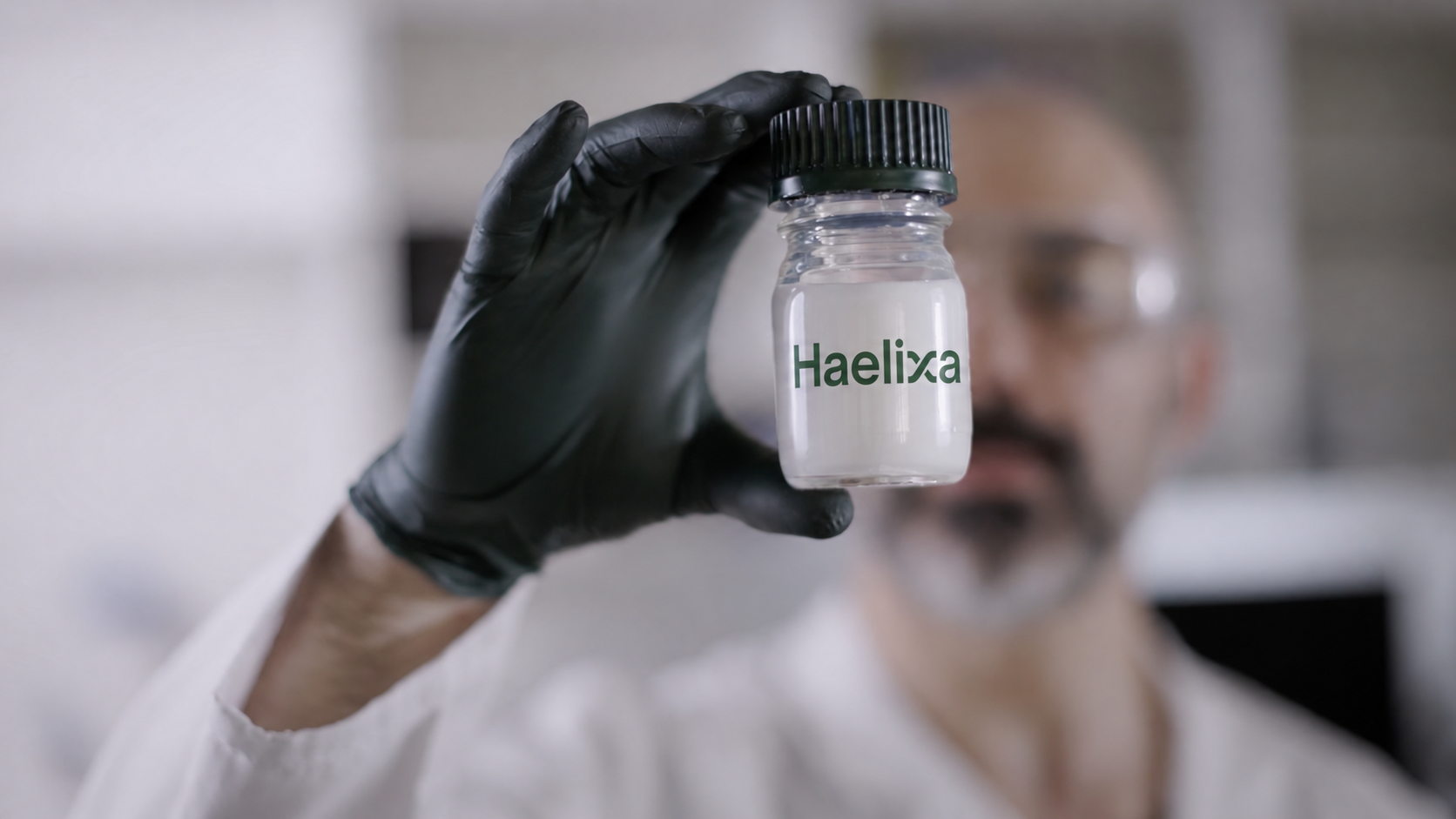
With ProofDNA™, the Maison applies an invisible DNA marker at production. The marker is built with natural DNA sequences, harmless and built to be resistant. It is highly secure, cannot be removed and doesn’t affect quality.
The marker stays in the object through every change of ownership. Verification is performed by qPCR analysis in an independent forensic lab, or with onsite test kits.
This gives each point in the resale chain a physical answer, not an opinion:
- Certified pre-owned and buy-back programmes. The Maison verifies a piece before taking it back into inventory under its own name.
- Resale platforms. High-value items that pass visual and AI inspection, or remain inconclusive, can be confirmed with forensic proof.
- Service and repair. Workshops confirm an object is genuine before servicing it.
- Owners and insurers. Verified provenance supports the value of a piece at resale or in a claim.
ProofDNA™ does not intend to replace expert inspection. It closes the cases inspection cannot and enables verification on spot. The DNA marker belongs to the Maison, and only the Maison can authorise its verification. This allows a Maison to work with trusted resale platforms, giving them the means to confirm the authenticity of the pieces they offer and protecting future buyers against counterfeits
Brands have the chance to empower legitim online-trading platforms to securely identify the authenticity of the offered items and hence protect the future buyer against counterfeit products
Klemens Link, Director Anti-Counterfeiting and Brand Protection, Haelixa
The second sale is the real test
At the first sale, the boutique vouches for the object. After that, the object has to vouch for itself. As Maisons move into resale, authenticity becomes a guarantee that must last the life of the piece. Paper certificates can be duplicated, items might be swapped. A DNA marker cannot.