As featured in Swisswatches Magazine, August 2026
Counterfeit watches have reached a level of quality where some replicas can only be identified by trained experts or by the brands themselves. For an industry built on trust, craftsmanship, and brand value, this is no longer a nuisance at the margins of the market. It is a structural risk.
The scale of the problem
According to an OECD study published in 2025, 52% of global customs seizures of counterfeit watches between 2020 and 2021 involved Swiss rights holders. In 2021 alone, the estimated value of these counterfeit watches reached USD 1.88 billion, equivalent to 7.7% of legitimate Swiss watch exports that year.
The market has also changed in character. At the top end, so-called superclones reproduce exact case dimensions, sapphire crystals, ceramic bezels, and movement architecture. Some factories claim accuracy of 95 to 99% relative to the original. E-commerce and small-parcel shipping have multiplied distribution channels, and counterfeits increasingly enter legitimate circuits through returns, resales, repairs, and after-sales service.
The consequence is not only lost revenue. When a client unknowingly purchases a counterfeit, trust in the brand erodes, and clients expect a Maison to be able to guarantee authenticity regardless of where the watch was purchased.
Why existing authentication methods fall short
Certificates can be forged. Serial numbers can be copied. Holograms and labels indicate authenticity but can be replicated. RFID and NFC identifiers can be removed, cloned, or transferred to another product. Blockchain and Digital Product Passports record a product’s history, but they verify a digital record, not the physical object.
Blockchain records a claim. ProofDNA™ verifies the object.
Authentication embedded in the material itself
ProofDNA™ applies a brand-specific DNA marker directly to the watch. As standard, four components that remain exposed to counterfeiting, replacement, or manipulation across a watch’s lifecycle are marked: the case, the bezel, the bracelet or strap, and the clasp. Individual dial or movement components can also be marked.
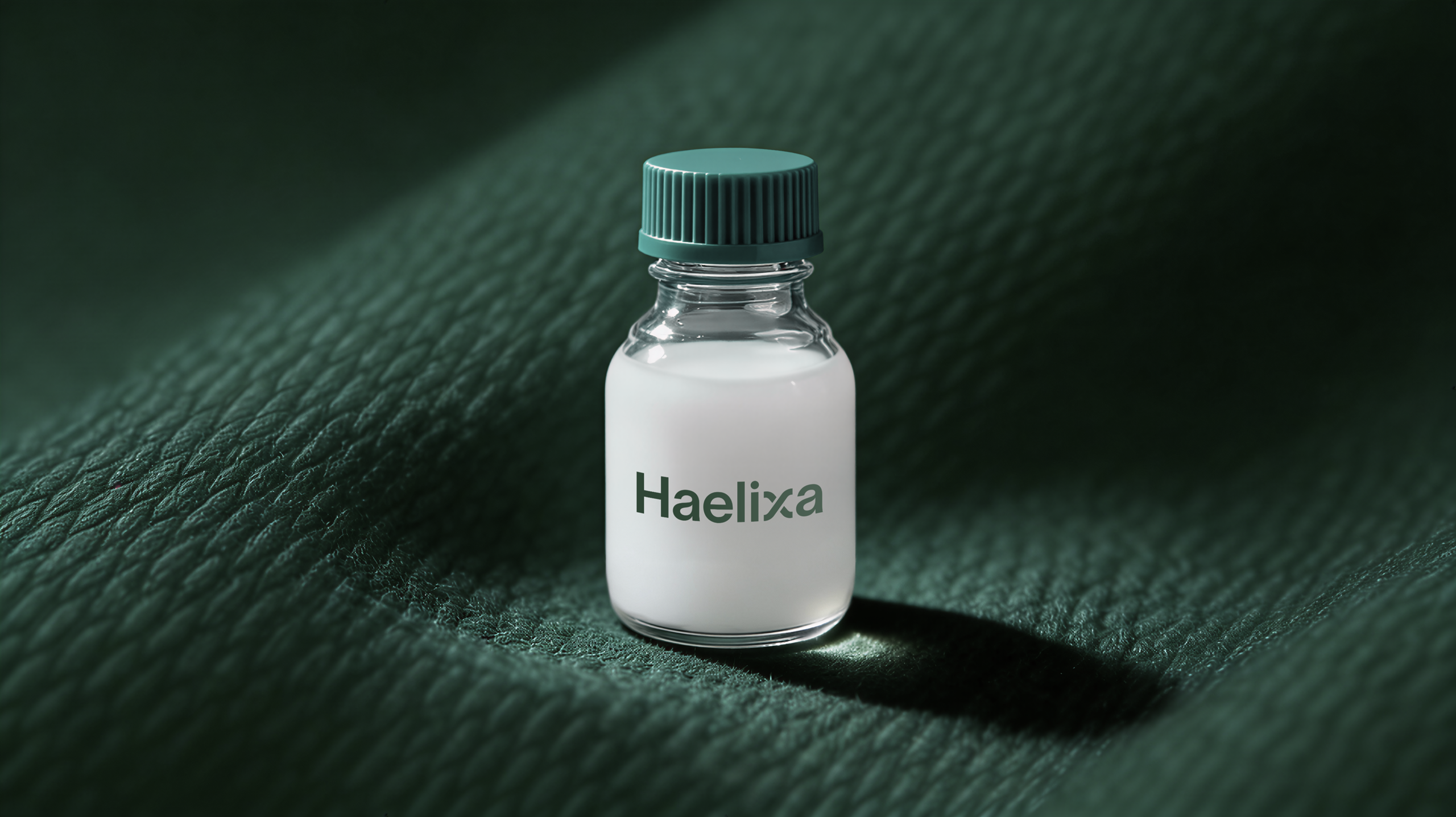
The components are immersed in a bath containing the DNA marker. The marker bonds directly with the material and spreads across the surface, leaving no visible residue and requiring no additional cleaning or polishing. The Haelixa marker is built with natural DNA sequences, is invisible and harmless, and is built to be resistant: it cannot be removed, copied, or substituted. As long as the marked component remains on the watch, the marker stays connected to the product through sale, resale, and returns, so authenticity can still be established forensically decades later.
Verification in 35 minutes
Authentication follows a straightforward process. A sample is taken from the marked component with a swab and analysed by qPCR using the ProofDNA™ Reader, on site in a boutique or service centre. Within around 35 minutes, the result confirms whether the registered DNA marker is present.
Control remains with the Maison
Ownership of the DNA code always remains with the brand. Each ProofDNA™ Reader operates on a key-lock principle: it can only identify DNA codes that have been assigned to that specific device. Without the assignment, the Reader cannot even determine whether a watch carries a marker at all. The brand decides who is authorised to authenticate, whether that is limited to its own service centres or extended to authorised retail partners.
The same logic applies to deployment. Once Haelixa produces and supplies the marker, brands mark and authenticate their watches independently, with Haelixa supporting integration into existing production workflows. Markers can be individualised per brand, per collection, or per individual watch, and each physical marker can be linked to digital solutions such as a Digital Product Passport or NFC, connecting physical proof of authenticity with a watch’s digital identity.
Whether ProofDNA™ operates purely in the background, for example to rule out counterfeits in product returns, or is communicated to clients as an additional element of trust, is entirely the brand’s decision.
Download our ProofDNA™ Brochure to learn more.
Read the full feature here.